Showing posts with label Lindsay Butcher. Show all posts

Thursday, July 5, 2007

Disturbing Fascination With Horror and Crime


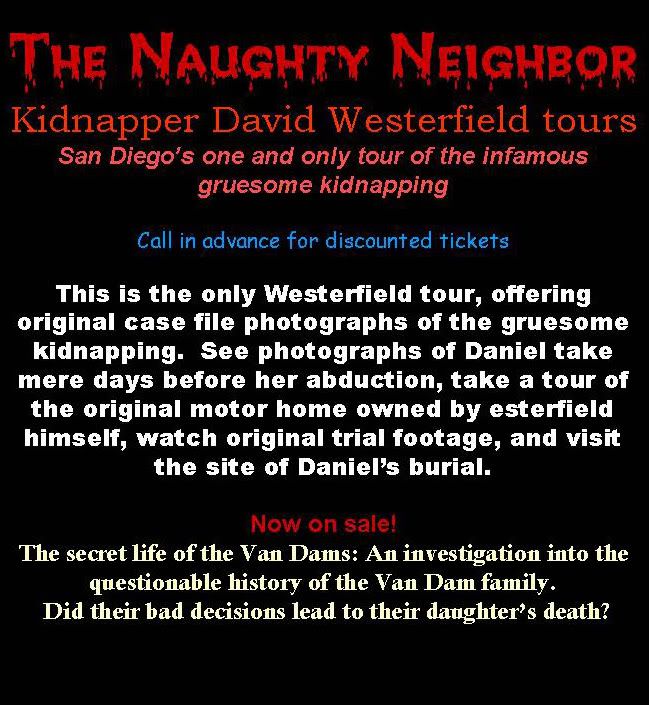
Please do not take offense to this flyer. It has been completely fabricated and formulated to mock a Jack the Ripper online flyer.


Having said that, and having caught your attention with the above:


People have since the beginning of crime, been fascinated by the psychology, motives, and tactics behind crime and horror. The Exorcist one of the top horror movies of all time has grossed $442,000,000.00, there have been 9, count them 9 Halloween movies, and another is on its way. That is just the movies. Whole documentaries and studies have been made on the basis of delving into the mind of a serial killer. What is it that drives our curiosity and fascination with terror?

In today’s world, human beings generally speaking, do not have to worry about being hunted. Terror was a common reaction when we still lived amongst great predators. Nowadays we fabricate horror in the guise of movies or haunted houses because there is something cathartic and energizing about facing danger and stress. Horror serves as a form of dealing with our own mortality and the existential implications of the fact that no one escapes death.


It's just you, hey, Jude!

The following headings taken from The Beatle’s song Hey Jude bare relevance to my opinion of the Le Samurai experience:

Hey Jude don’t let her down:

Yes Jude please don’t let her down…
One of the most noticeable characteristics of the audience that night at the viewing of Le Samurai was that it was predominantly female. It isn’t exactly shocking that a gaggle of girls should show up at any opportunity to see the one and only Jude Law, but it must get annoying, for his roadies that is, to see this short and messy excuse of a man (Jude Law was much shorter and untidy in person, a little shocking) always bagging hot chicks, always having to deal with screaming fans willing to do anything for an autograph, and then there is you a loyal roadie standing by picking up the scraps.

However in the male attendees defence, what Jude had to say about the movie was actually insightful. The fact that it was Jude Law talking about the film, made movie goers a bit more attentive to the aspects of the film that he pointed out. You paid more attention to the movie because a celebrity has shown interest in it as well.


Don't you know that it’s a fool who plays it cool:

The conversation between the old man (im sorry I don’t know his name, when I probably should) and Jude was very cool and casual, a bit “Inside the Actors Studio-esque” which made every body a bit more comfortable and less anxious about seeing the “big celebrity”.

You'll do, the movement you need is on your shoulder:

He needed to move his shoulder a bit for my sister to get a better photo op :)

The minute he stepped onstage Im sure he was temporarily blinded by the thousands of camera flashes. It seems that people were there for the celebrity instead of the film. If you go to the French institute any other night less than half of the same theatre is full. Jude packed the house.

Then you can start to make it better:

Ultimately Jude Laws presence, and more importantly his opinion, made Le Samurai more enjoyable. Most people stepped into the Le Samurai experience with a preconceived acceptance because of Jude’s praise for the film. Those who did not, probably adopted the opposite opinion just to be contrary: to try to prove wrong, and disagree with a celebrity.

Le Samurai itself turned out to be an enjoyable film. Jude's insight into the characters helped decifer some of the films cryptic meaning, specifically the protagonist's gentle manlyness, he was a romantic hit man, a paradox in himself. That may just be the effect of Jude taking its toll on my opinion, however it is an intelligent opinion to have.

Dumbo

The 1940’s was an era riddled with prejudice and civil strife being the decade before the onset of the civil rights movement. Separate but equal was still an absolutely acceptable practice. People with disabilities, people of color, immigrants and the poor were considered less human. Such injustices were considered ordinary and acceptable by society. The views and practices of the time were so standard that children’s films failed to censor any controversial issues.

One such issue is that of racism. watching Disney’s 1941 film Dumbo, it is as plain as night and day that racism saturated society. All of the human characters are Caucasian, most of the anthropomorphized animals seem to be derivative of white society and the characters that are obviously not white are represented in such a stereotypical manner.

The only black characters in Dumbo are the black birds. The birds, obviously based on urban black culture of the time, are represented as not very well to do, wearing patched clothing, and intellectually inferior. The biggest sign that the birds are inspired by the black culture of the 40’s is in their speech. The birds use slang and ebonics, calling each other “brotha”, speaking with southern accents, and generally using mutilated grammar, traits usually stereotypical of the black community in the 40’s. It is a bit ironic that these characters that society holds such prejudice against, turn out to be some of the most integral characters to the story and success of Dumbo. The birds are ultimately the ones who teach dumbo how to fly and thus lend a hand to his success and happiness. It is ironic that the characters that were inspired by the “lesser race” play such a positive part in the story. Did the writers include this contradictory representation on purpose? Were they avant-garde civil rights activists?

the sound of music, or should I say the picture of music


There is a rhythm to life. A beat courses through every action, every movement, every sound, sight, and smell. This beat is the soundtrack of everyday; it is up to you whether you listen and hear it. The next time you are walking down the street, notice every little detail, and listen in your head to the sound it makes. See the sounds.

This process works both ways. Listen and see. Close your eyes, slam a book, you can see how dense it is, if it is paperback or hardbound, you can see it hitting the table and falling to the ground. What about abstract sounds, something that doesn’t already have a visual connotation in your mind? Play a piano, but do not picture a piano and the player, instead follow the story that the notes tell you. Pay attention to the mood of the music and set your own images to the auditory tale that each sound weaves.

Listening to master saxophonist Jean Toissant’s wailing music, many jazzy images pop up: a tap dancer, a smoky bar, a sexily clad lady, a burning cigarette. However one piece in particular, told a different tale. This piece evolved with time, starting off with a steady beat, a slow introduction. I saw a nervous athlete, getting hyped up before a game, knowing what to expect, and expecting surprises. Meditating on a bench spotlighted in a dark gym, elbows on knees, hands kneading his neck deep in concentration.

The tune changed a bit, quickened, and Toissant hits some high notes. The game has started, our hero’s heart is beating, adrenaline pumping, ready to fight. Here is the tip off, the ball is in possession.

As the song continues you can imagine the game progressing, the beat of the ball hitting the ground with each step, players passing back and forth moving up and down the court. Any small hiccup in the tune can be fancy foot work, or a fast break.

As the song comes to a close, the pace quickens again full of suspense. I imagined a rebound, our hero grabs the ball out of mid air, spins and heads down the court. The sax wails and screams as he dribbles toward the basket. A sudden screech means our athlete ran into some trouble, had to stop in his tracks and avoid some defence, he swivels around evading the grabbing hands of the other team and passes to a team mate. This all happens in slow, yet fast motion. His senses are heightened, similar to a life or death situation. His court vision is spectacular, he can see everything happening, he feels the sweat on his face and back, he can hear shoes squeaking on the waxy court, and like tunnel vision he zeroes in on the ball that is headed straight toward him. The music follows each sense explaining how the ball feels in his hands, how he can smell the players around him. Each squeal of the sax is another exciting moment.

As the music begins its crescendo; the drummer picking up the pace hitting each drum, the piano running up and down the keys frantically, the bass keeping that backbeat going, and Toissants sax singing out of control, our hero makes it past the defence. He jumps, flying above everybody. Hands shoot up trying to block him but it is too late. He stretches reaching for the basket and almost effortlessly releases the ball, like handling a fragile bird, and lets it slip through the net. With the last lingering vibrations of the drummer’s symbols, the lights fade to black on the court and our athlete is walking head held high through the exit.

the merchant

Many literal adaptations of Shakespeare’s plays have been made into film. Some may change the era but remain faithful to the script, some offer the original theatre performance captured on film, and still others are simply influenced by Shakespeare’s masterpieces. The following is my cinematic interpretation inspired by the casket scene in the merchant of Venice:

What you desire, what you deserve, and what you get:

A rich prince walks into a bar, sits down and immediately starts boasting about how rich and fabulous he is. He has three palaces in various countries, thousands of ladies to choose from, and millions of pounds at his disposal, which he has no qualms spending freely. The old maid bar tender listens attentively while washing out a glass.

Rich prince: give me a bottle of only your finest!

The old maid squints an eye and knowingly chooses a particular bottle. Handing the prince his bottle she warns him,

“he who drinketh this shall gain what many men desire”

The rich prince proclaims “well that is of no matter, I desire nothing!”

As soon as the prince takes one sip of “the finest” he drops dead and is never mentioned again.

A few weeks later a bitter apprentice comes strolling into the bar. This apprentice complains to the old maid about how he deserves much more out of life. He claims,

“My master knows nothing, and I have to put up with him day in and day out. If I had it my way I would be a well to do nobleman, with 5 wives and endless wine!”

The old maid nods her head at all of the appropriate comments while wiping down her bar.

Apprentice: “Hag, give me what I can afford!”

Slamming down his life’s earnings, he decides to drink to his self pity.

The old maid flares a nostril and calculatingly reaches for a specific spigot. Handing the apprentice a pint she cautions him

“he who drinketh this shall get what he deserves”

The apprentice: that’s fine by me I deserve all of the gold in the world!

And with one gulp thousands of pounds of gold come crashing down on the apprentice killing him instantly.

A few weeks later a poor wanderer wanders through the old maid’s doors. She looks up from counting her cash and notices the state of the man. He wears hand me down thrift clothes which have been shabbily patched. She judges they are probably his only possessions, when she notices a small mangy looking dog at his heels. The man reaches down and scratches the dog behind one ear, then continues to the bar.

Wanderer: “M’am, I am but a poor wanderer, I have not a pound to my name, but I assure you if you could spare some bread and water I would forever be in your debt.”

The old maid takes uncharacteristic pity on the man and breaks half a loaf for him and hands him a cup of water. As the man turns to head out the door she wagers, she will never see him again, and she was only abetting his begging ways. But at that moment the man bends down and offers the starving dog all of the bread and water.

Astonished, the old maid invites the man to share a pint of beer. The wanderer thanks her kindly and chooses a stool at the bar.

The old maid purses her lips and goes off in search of a certain brew. She pours two mugs and in her toast she explains “he who drinketh this must give and hazard all he hath” the wanderer doesn’t understand a word but humbly toasts and the two sip in tandem.

Sputtering, the wanderer chokes as all of his clothes change from flea ridden rags to a new suit. He watches in amazement as the old maid transforms from a wrinkle ridden old hag into a beautiful young bar maid.

Once the dog stops barking, and all chaos ceases, the once old maid explains that she had been cursed for centuries. She had been turned into an ugly old maid and was forced to judge men on their character and allot payment or punishment accordingly. When the wanderer came and did not demand a thing from life, or desire more than what he had, and gave everything he could, he broke the curse.

A few weeks later the now young maid and the wanderer exchange vows and live happily ever after.


While Shakespeare’s scene revolves around image and inner beauty, my scene spins off of his references to human character. The caskets in his scene remind the suitors that they cannot always have what they want, they cannot always get what they think they deserve, and they must always give in order to receive. Once the suitors spend time with Portia, they realize that the ornamental caskets are merely pretty boxes holding nothing inside. Lead however, is merely an ugly exterior holding true inner beauty. My scene revolves around the inscriptions on each casket and what they imply.